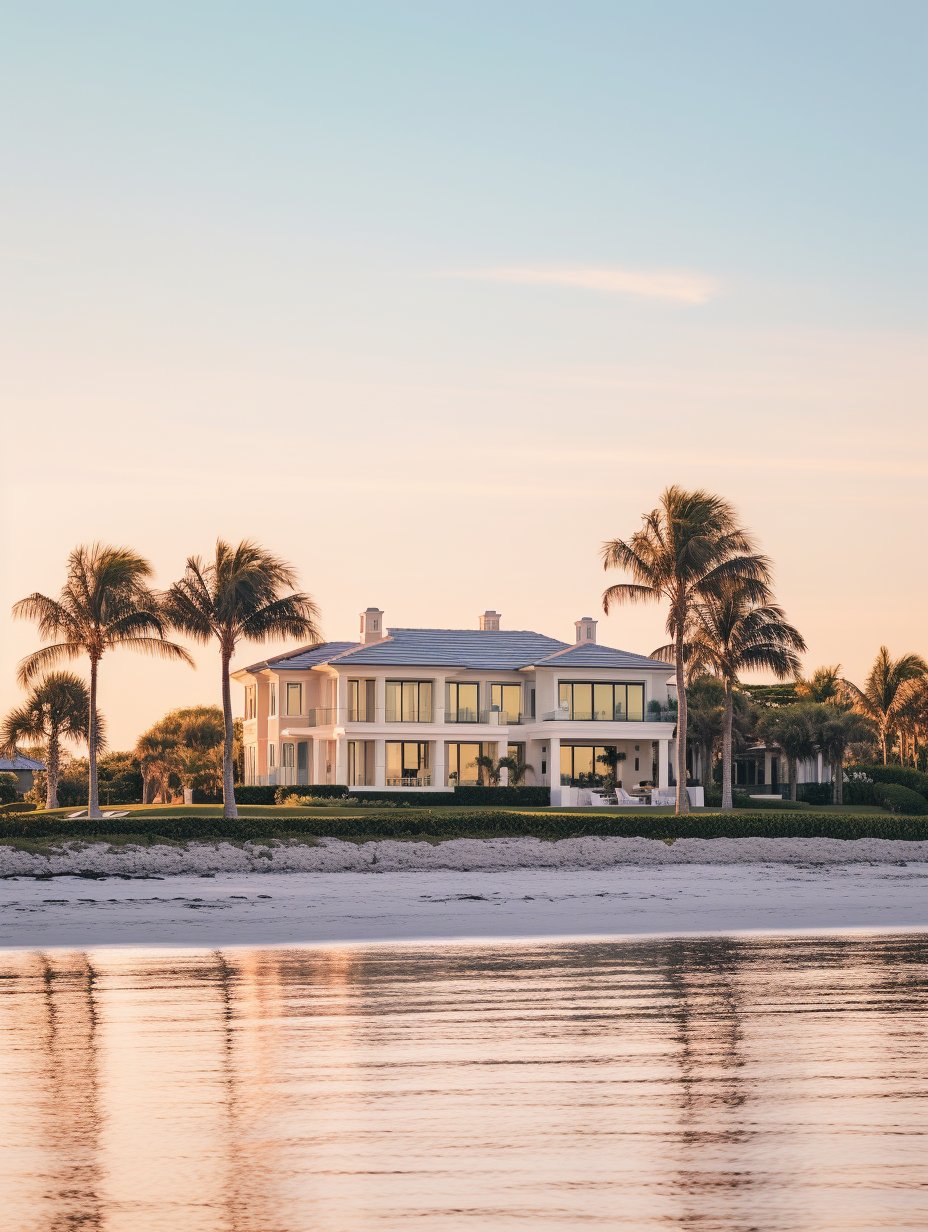
This year, the Naples market is largely split by property type: single-family homes are holding firm at a median near $750,000, while condos have softened, with the median down about 2 percent and supply loosened to roughly seven months. Houses are still selling quickly, so single-family sellers keep the advantage while condo buyers have gained room to negotiate.
Single-Family Medians
Single-family medians sit near $750,000, up roughly 7.6 percent year over year, with active single-family listings down about 22 percent.
Condo Prices
Condo prices are down about 2 percent over the past year, and condo supply sits near seven months, giving buyers modest room to negotiate.
West of US 41
West of US 41, the million-dollar-plus single-family median reached about $6.2 million over the past year, a different market from neighborhoods east of the highway.
HOA & Assessments
HOA increases of 8 to 15 percent and one-time assessments of $5,000 to $25,000 now shape condo offers as much as the list price does.
The clearest line in the Naples market runs right down US 41. West of the highway, in Old Naples and the deep-water canals of Aqualane Shores and Port Royal, limited land keeps single-family prices climbing. Port Royal alone posted a median around $17 million last year.
East of 41, newer condo buildings are competing against one another, and buyers are scrutinizing reserves and insurance after Florida's post-Surfside funding rules pushed monthly dues and assessments higher. When a condo carries a pending assessment and a comparable house does not, the house wins even in a cooling market.
Negotiate the Condo
If you want a condo, you have room to negotiate. Ask for the reserve study and two years of assessment history before you discuss price, because a low sticker with a $20,000 assessment behind it is not a deal.
Come Prepared
If you want a single-family home west of 41, expect competition and come prepared, since inventory there is still tight.
Shop in Summer
If your timing is flexible, shop in the summer. Between May and September, the seasonal buyers are gone, listings sit longer, and we routinely negotiate terms that would be impossible in February.
The most important thing to know before moving to Naples is that carrying costs, not the purchase price, will set your real budget: on a home near $795,000, homeowners insurance alone runs $4,000 to $15,000 a year, and more inside a flood zone. Florida's lack of a state income tax is what offsets those costs, which is why buyers from high-tax states still tend to come out ahead.
Collier County's effective property tax rate sits near 0.63 percent, so a $750,000 home runs closer to $4,700 a year in county taxes than the higher bills common in northern states.
Florida's homestead exemption can remove up to $50,000 of assessed value, and the Save Our Homes provision can cap annual assessed-value increases at 3 percent for as long as you hold the home.
Flood coverage is a separate policy from homeowners insurance, averaging about $1,185 a year across Collier County but running $3,500 or more at high-risk coastal addresses.
Hurricane and wind coverage carries its own deductible, often 2 to 5 percent of the insured value, a larger out-of-pocket exposure than a flat dollar amount.
A roof's age and a home's elevation move an insurance quote more than square footage does, so two similar houses can carry very different annual costs.
Naples sits low on the Gulf Coast, and where a home falls on the FEMA flood map is one of the biggest levers on its carrying cost. A house in a high-risk zone like AE, close to the water in Old Naples or Aqualane Shores, can cost several thousand dollars a year to insure against flood, while a comparable home a few blocks inland in a lower-risk X zone may cost a fraction of that.
Before you write an offer, ask for two documents: the elevation certificate, which sets the property's flood rating and premium, and the prior flood-claim history, since past claims follow the address and shape what you will pay. Treat the flood zone as part of the price, not a footnote, as you compare our Naples listings across neighborhoods.
If the home becomes your primary residence, file for the homestead exemption with the Collier County Property Appraiser by March 1 of the year after you close. Beyond the up-front exemption, the Save Our Homes cap is the real long-term win. Buyers relocating from another Florida county can often port a share of their prior Save Our Homes benefit, so ask us to run that number before you assume a full reset.
Naples gives you far more to choose from than Marco Island, with condos, downtown estates, and inland golf communities across a wide price range, plus year-round dining, shopping, and services. Marco Island is smaller and almost entirely waterfront, with canal access from most homes.
Waterfront Inventory
Nearly 80 percent of Marco Island homes were platted along canals, making its inventory overwhelmingly waterfront compared with Naples.
Naples Price Range
Naples offers a much wider range of price points, from new downtown condos starting near $2 million to Old Naples single-family homes averaging about $6.28 million in 2025.
Built-Out Market
Marco Island is essentially built out with resale-only lots, limiting opportunities for new construction compared with Naples.
Location & Access
Marco Island spans about 12 square miles and sits roughly 20 miles south of Naples, with access via two bridges over Collier Boulevard and San Marco Road.
Property Type & Water Access
Both towns are in Collier County, so the real difference comes down to property type and water access rather than the tax base.
Naples supports a dense, year-round core of dining, shopping, and services along Fifth Avenue South, Third Street South, and Venetian Village. Marco Island's retail is scaled to the island itself, with groceries, marine supplies, and boutique shops. Many residents drive about 30 minutes into Naples for a wider selection. Weighing property type against convenience, Naples remains the market with wider choices.
Naples is the deeper and more varied market. Inside one market you can buy:
A downtown condo near Fifth Avenue South, walkable to dining and the beach.
A beachfront home in Park Shore along the Gulf.
A deep-water estate in Aqualane Shores or Port Royal with direct canal access.
An inland golf home in a gated country-club community.
Marco Island concentrates almost entirely on waterfront housing, and its Estate Area is valued for deep-water canals with no bridge restrictions out to the Gulf. That concentration is a real strength when water access is your main goal, but it also means fewer non-waterfront and downtown options than Naples carries at any given time.
Buying a Naples condo is a good investment when the building has passed its milestone inspection and funded its reserves. Two units at the same $450,000 price can be worth very different amounts once a pending special assessment is factored in, so the paperwork decides the return, not the sticker price.
Florida law now requires a milestone structural inspection for condo buildings three or more habitable stories tall, plus a Structural Integrity Reserve Study repeated at least every 10 years.
House Bill 913 set the reserve-study completion deadline at December 31, 2025, so many Naples buildings only recently locked in real reserve numbers.
For budgets adopted on or after January 1, 2025, owners can no longer vote to waive or underfund reserves for the structural items the study identifies.
The reserve study must fund the roof, load-bearing structure, fireproofing, plumbing, electrical, waterproofing, and windows, plus any component whose repair tops about $25,000.
Buildings that are behind are closing the gap through special assessments, lines of credit, or loans, and each option changes what a unit actually costs to own.
Review the Reserve Study
Review the completed reserve study to confirm whether the roof, structure, and other required components are adequately funded.
Check the Milestone Inspection
Review the milestone inspection report to confirm the building passed its structural review and identify any issues that may require attention.
Compare Budgets and Reserves
Look at the last two years of budgets and reserve balances to see whether dues are keeping pace with rising costs.
Read Board Meeting Minutes
Review recent board meeting minutes, where a looming roof replacement or insurance shortfall often surfaces months before it becomes a formal assessment.
Picture two $450,000 units of the same size in different buildings. In a fully funded building, that price is close to the real cost. In a building facing a $30,000 special assessment and a dues increase to rebuild reserves, the true cost is meaningfully higher, and resale will reflect it. This is why a slightly higher sticker in a well-run building is often the stronger investment in Naples.
For a full country-club lifestyle, three Naples communities lead: Grey Oaks, Mediterra, and Talis Park. There are some differences in how much golf you get and what it costs to join, from Talis Park's $65,000 sports initiation to $300,000 for full golf at Grey Oaks.
Grey Oaks Country Club is the only Naples club with three championship courses, the Pine, Palm, and Estuary, and membership is mandatory with every home purchase.
Mediterra spans roughly 1,700 acres in North Naples with two Tom Fazio courses and a private Gulf beach club.
Talis Park is built around a single Greg Norman and Pete Dye course and the Vyne House clubhouse.
Full golf memberships at all three are capped and sell out, so availability can matter as much as price, and annual dues run about $10,000 to $26,000.
Grey Oaks Country Club
Grey Oaks Country Club offers 54 holes across the Pine, Palm, and Estuary courses, making it the only three-course club in the market. Membership is required for every buyer, with full golf memberships capped below 1,000. Annual dues for full golf membership are near $24,000, while sports membership offers a lower-cost option with access to fitness, tennis, and dining.
Mediterra
Mediterra is a gated North Naples community of fewer than 930 homes across more than 1,000 acres of preserved land. Its two Tom Fazio courses are limited to about 450 golf memberships, keeping full golf membership at capacity in recent seasons. Full golf initiation rises to $300,000 on August 1, 2026, while a private Gulf beach club adds another distinction for qualifying memberships.
Talis Park
Talis Park centers on a par-72 course co-designed by Greg Norman and Pete Dye, stretching about 7,015 yards with elevation changes uncommon in Southwest Florida. The Vyne House clubhouse offers dining, fitness, spa, and retail amenities. Sports memberships start around $65,000, while full golf initiation is $225,000 and rises to $300,000 on August 1, 2026.
Before buying in Naples, check four things the listing sheet will not tell you: the home's wind-code construction, any Community Development District bond riding on the tax bill, the community's rental rules, and, for waterfront homes, whether a boat can reach the Gulf without passing under a fixed bridge. Any one of these can add thousands a year in ownership costs or a five-figure repair, so they deserve as much attention as the asking price.
Homes built after Florida's 2002 statewide building code carry impact-rated windows and doors engineered for Collier County design wind speeds near 170 to 180 mph, so an older home may need retrofits before it can be insured affordably.
Many newer gated communities carry a Community Development District bond repaid through your annual property tax bill, often a few thousand dollars a year on top of HOA dues, with the capital portion eventually paid off.
On canal homes, direct Gulf access with no fixed bridges commands a premium over bridge-restricted or canal-only access, so confirm bridge clearance and canal depth before you write an offer.
Short-term-rental rules vary by community and by jurisdiction, and the City of Naples registers rentals separately from unincorporated Collier County.
The house carries risks a listing photo will not show, mostly structural and waterfront:
Two homes at the same price can cost very different amounts to own once the community's rules and assessments come into view:
Naples has many luxury new construction options, including The Avenue and Halcyon downtown, and Twenty | Twenty on Gulf Shore Boulevard. Prices run from about $2.9 million for a downtown residence to more than $10 million for a waterfront unit with a private boat slip.
The Avenue, on Fifth Avenue South downtown, offers two-bedroom-plus-den to four-bedroom residences from 1,900 to 3,500 square feet, priced from about $2.9 million to $7.8 million.
Twenty | Twenty, on Gulf Shore Boulevard, sits between the Gulf and Moorings Bay, with three-bedroom residences from 3,175 to 3,790 square feet, priced from $7.5 million to more than $10 million and private boat slips.
Halcyon, also in downtown Naples, offers two-bedroom-plus-den residences above 2,000 square feet, starting near $3 million.
The Dawn McKenna Group represents all three, so we can help you compare floor plans, pricing, and delivery timelines across them for you.
Naples' current new-construction pipeline is concentrated downtown and along Gulf Shore Boulevard:
A mixed-use tower on Fifth Avenue South with ground-floor dining and retail, priced from about $2.9 million, with first move-ins anticipated in early 2028.
A downtown condominium of two-bedroom-plus-den residences above 2,000 square feet, starting near $3 million.
A boutique building on Gulf Shore Boulevard set between the Gulf and Moorings Bay in The Moorings, with three-bedroom residences, private boat slips, and pricing from $7.5 million.
Buying pre-construction lets you select finishes and lock today's price against a later delivery, though your capital is committed while the building rises.
A finished residence lets you walk the actual unit, confirm the view, and close now at a known number.
For an owner who is away much of the year, turnkey management keeps watch on the home while you are gone, covering routine interior and exterior checks, hurricane preparation, vendor coordination, and seasonal opening and closing.
Turnkey management typically covers scheduled property checks, storm preparation and shutter deployment, vendor coordination, and seasonal open and close for owners who split the year.
Rentals of six months or less are subject to Collier County's 5 percent tourist development tax, which the owner is responsible for collecting and remitting.
The City of Naples registers short-term rentals separately from unincorporated Collier County, so the address determines which process applies.
Many gated and country-club communities cap or prohibit short-term leasing through minimum lease terms in their governing documents, so confirm the rules before you count on rental income.
Routine oversight
Scheduled checks of the interior, exterior, and mechanical systems so small issues are caught before they become claims.
Storm readiness
Shutter or panel deployment and post-storm inspection during hurricane season, June through November.
Vendor coordination
A single point of contact for cleaning, landscaping, pool service, and repairs.
Start with the rules, not the nightly rate. Confirm your community's minimum lease term first, since a building that requires 30-day or seasonal minimums rules out nightly rentals entirely. Then register with the correct jurisdiction, set up collection of the 5 percent tourist development tax, and budget a management fee against projected income before you assume a return.
A luxury auction sells a one-of-a-kind property on a fixed timeline, using a defined marketing period, a set auction date, and pre-qualified bidders who post a deposit, rather than waiting out an open-ended listing. It suits trophy homes that are hard to compare to anything else, where competitive bidding establishes a price the traditional market struggles to set.
Sotheby's-backed Concierge Auctions runs a compressed process built to close in about 60 days, with bidders qualified and deposit-backed before the sale.
The platform accepts roughly the top 5 percent of properties submitted and markets them to a global database of high-net-worth buyers, which matters for assets that are hard to comp.
Sales can run with a reserve, a minimum the seller will accept, or in some cases without one, and properties sell with zero contingencies.
Dawn McKenna sits on the Concierge Auctions Agent Advisory Board, so we guide Naples sellers through the process with a local listing broker involved throughout.
The auction model fits a specific kind of Naples property rather than the general market:
Concierge Auctions builds a concentrated marketing campaign over a set period, drawing qualified buyers to a single online bidding platform. Bidders register and post a deposit in advance, so everyone is verified before the auction opens. The seller decides beforehand whether to set a reserve, and the winning bid closes with no financing or inspection contingencies, typically within about 60 days. Because the property lists with a local broker throughout, you keep market-specific representation alongside the platform's global reach.
Naples real estate rewards buyers and sellers who know exactly which building, block, and zone they are dealing with, and that is the level we work at every day. When you are ready to weigh a specific home or condo, reach out to us, the Dawn McKenna Group, and we will run the carrying costs, the reserves, and the comparable sales with you before you commit.